.webp)
Vishing Attacks: How to Recognize and Protect Yourself

Updated: Aug 18, 2025
Most of us have heard of phishing. These are scams that arrive via email or messages, with the aim of luring us to click on infected links or download files with malware. Vishing, however, goes the other way. Vishing — short for “voice phishing” — is a growing cyber threat that targets people through phone calls, voicemail, or voice messages. Instead of sending fraudulent emails, scammers use their voices to manipulate you into sharing personal information, like passwords, bank details, or Social Security numbers.
This article will help you recognize vishing attacks and take the right steps to protect yourself.
What is a Vishing Attack?
A vishing attack is a social engineering scam carried out over the phone. The caller pretends to be someone you trust — a bank representative, government official, tech support agent, or even a company you use — to create urgency and pressure you into revealing sensitive data.
Common Signs of a Vishing Attack
Urgent or threatening language – e.g., “Your account will be closed today if you don’t act now.”
Requests for sensitive information – Legitimate companies rarely ask, if ever, for passwords over the phone.
Caller ID spoofing – The number might look official but is faked.
Unsolicited calls from “official” sources – Especially if you weren’t expecting the call.
Too-good-to-be-true offers – Scammers may tempt you with prizes or refunds.
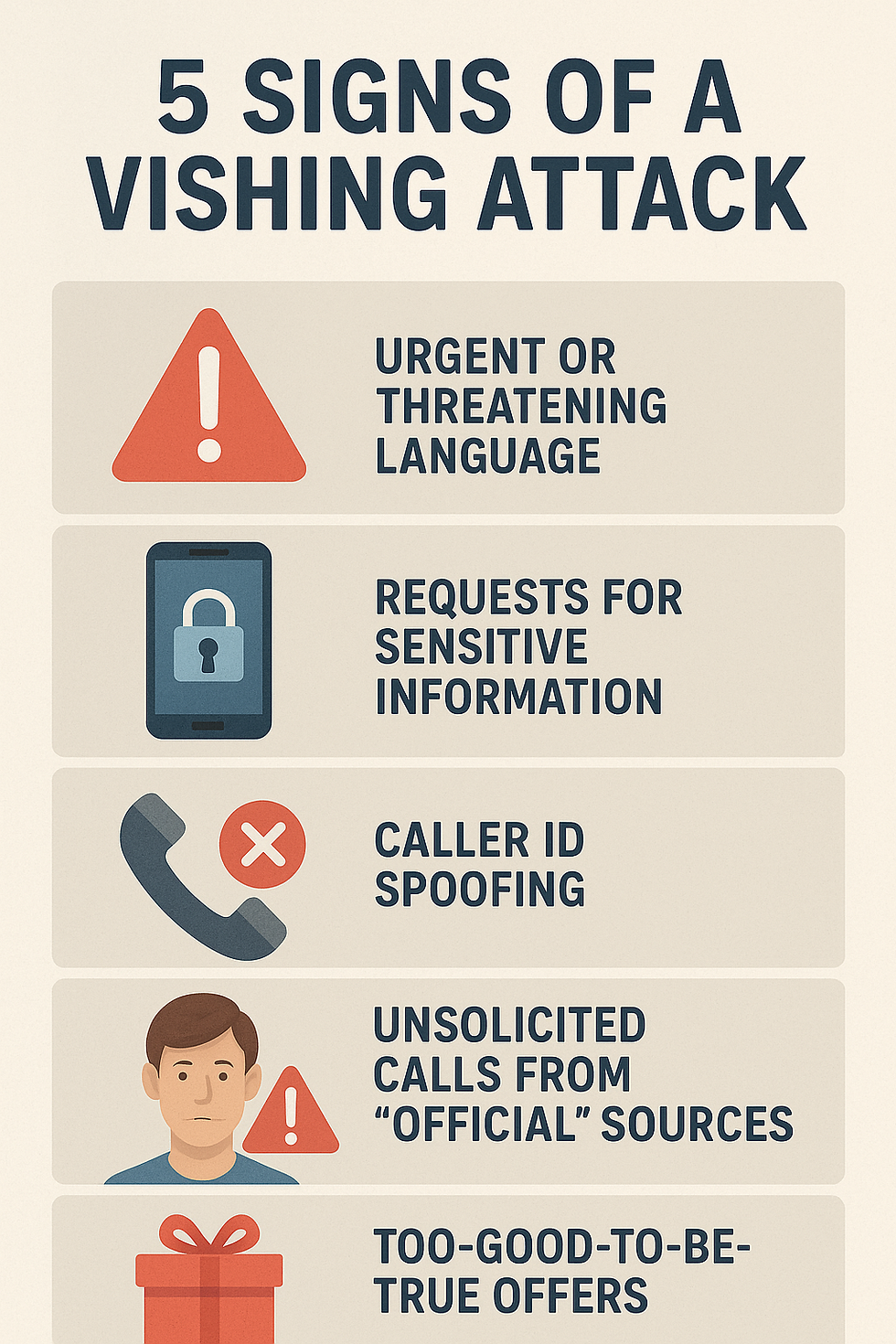
5 Signs of a Vishing Attack
Examples of Vishing Scams
Bank fraud calls pretending to detect suspicious activity and asking you to “verify” your account details.
Tech support scams claiming your computer is infected and urging remote access.
IRS or tax office calls threatening arrest unless immediate payment is made.

How to Protect Yourself from Vishing
Verify the caller – Hang up and call the official number.
Don’t share sensitive details – Passwords, PINs, and full account numbers should never be given over the phone.
Enable call blocking – Use your phone’s built-in spam filter or install a reputable app.
Report suspicious calls – Contact your phone carrier or local cybercrime authority.
Educate friends and family – The more people know, the fewer victims scammers find.
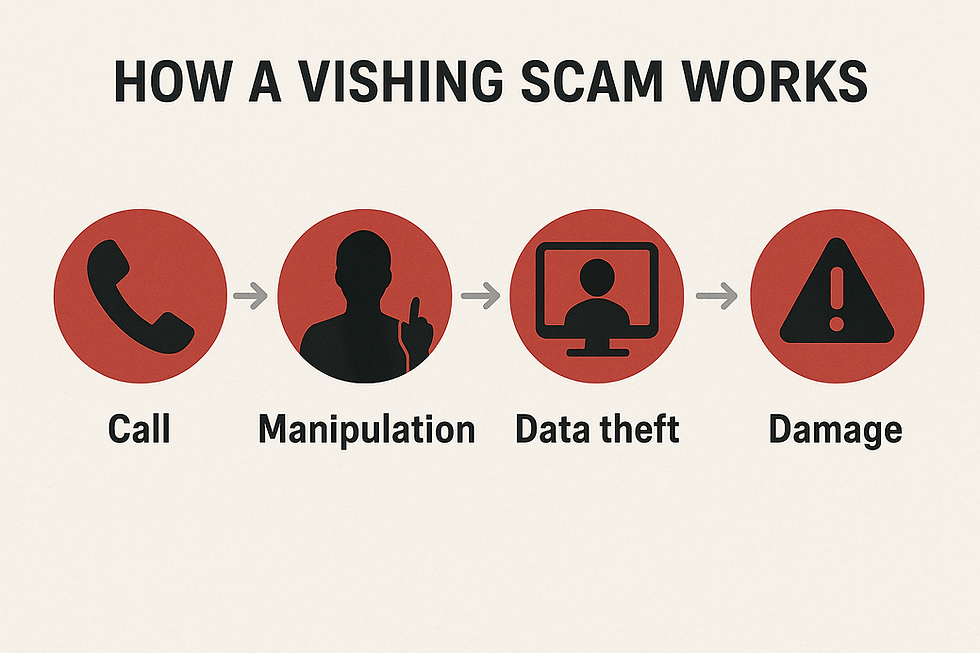
Why Vishing is Dangerous
Vishing can lead to:
Identity theft
Financial loss
Compromised online accounts
Because it’s human-based manipulation, even the best spam filters can’t always stop it — awareness is your strongest defense.

Final Thoughts
In an age where cybercriminals are getting more sophisticated, staying informed is your first line of defense. By learning to recognize the warning signs and refusing to give away personal details over the phone, you can keep your identity and finances safe. As social engineering evolves, so must the way we educate people about it. Since vishing is often the entry point for more serious security breaches, it is crucial to build awareness on a wide range of related topics.


